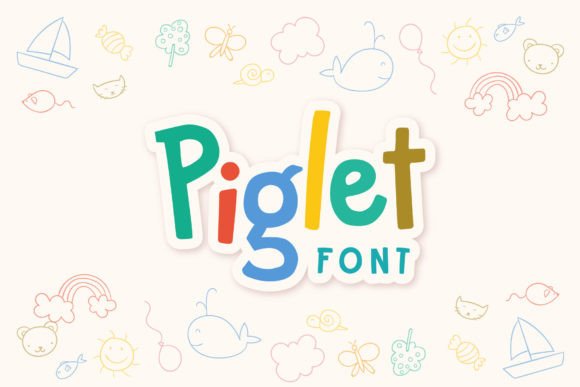
Piglet: Strategic Typography for Brands Rooted in Joy and Nostalgia
In the crowded landscape of visual identity, the choice of typeface is rarely just an aesthetic preference; it is a fundamental business decision that dictates how an audience perceives your brand's values, approachability, and intent. Piglet emerges not merely as a stylistic novelty but as a strategic asset for organizations aiming to bridge the gap between professional reliability and human warmth. This font, characterized by its handwritten touch and whimsical structure, encapsulates the joy of childhood memories while offering a sophisticated tool for modern branding challenges. When deployed with intention, Piglet transforms from a simple design element into a conduit for emotional connection, helping entrepreneurs and marketers achieve specific communication goals that rigid, corporate sans-serifs simply cannot reach.
The core value proposition of Piglet lies in its ability to humanize digital and print interactions. In an era where consumers are increasingly skeptical of polished, impersonal corporate messaging, a typeface that mimics the organic flow of a child's handwriting serves as a powerful counter-narrative. It signals transparency, creativity, and a lack of pretense. For educators launching new learning platforms, small business owners crafting packaging for artisanal goods, or event planners organizing community gatherings, the font acts as a visual shorthand for "friendly" and "inviting." However, leveraging this potential requires more than simply swapping out a header font; it demands a clear understanding of brand positioning and the psychological impact of typography on decision-making.
Aligning Visual Identity with Brand Positioning Goals
Effective branding is about consistency between what you say and how you look. If your strategic goal is to position a product as accessible, fun, and deeply connected to family values, Piglet offers a distinct advantage. Its characters, which seem to dance on the page, draw inspiration from famous cartoons and the uninhibited scribbles found in school notebooks. This aesthetic is not accidental; it triggers a specific nostalgic response in adults aged 20 to 50, reminding them of simpler times and fostering an immediate sense of trust.
Consider the implications for a children-centric brand. A logo designed with Piglet does not just label a product; it sets an expectation for the customer experience. It suggests that the company behind the product understands the target demographic—both the children who will engage with it and the parents who will purchase it. For marketers, this means the font supports higher engagement rates in campaigns focused on storytelling. When used on a storybook cover or a promotional flyer for a summer camp, Piglet reduces the cognitive load on the reader, allowing them to instantly categorize the brand as safe, playful, and imaginative.
However, strategic alignment goes beyond mere categorization. It involves using the font to differentiate your offering in a saturated market. While competitors may rely on clean, geometric fonts that blend into the background of e-commerce sites, adopting Piglet can carve out a unique visual niche. This differentiation is crucial for hobbyists turning their passions into businesses, where personality is often the primary selling point. By choosing a typeface that exudes charm, these creators signal that their offerings are curated with care and personal touch, rather than mass-produced indifference.
Operationalizing Creativity in Marketing Assets
Integrating Piglet into your creative workflow requires a shift from random decoration to purposeful design. The font shines brightest when applied to assets that benefit from a narrative tone. For bloggers and publishers, using Piglet for pull quotes or section headers can break up dense text, making content feel more conversational and less academic. This approach improves readability and keeps the audience engaged longer, directly supporting goals related to time-on-page and content retention.
For freelancers and agencies managing multiple client accounts, Piglet serves as a versatile tool in the toolkit for specific verticals. It is particularly effective for:
- Educational Materials: Worksheets, activity books, and online course interfaces where a non-threatening, encouraging tone is essential for learner confidence.
- Event Branding: Invitations and signage for birthday parties, school fairs, and family reunions where the atmosphere needs to be celebratory and informal.
- Packaging Design: Labels for organic snacks, handmade toys, or craft supplies where the "handcrafted" nature of the product must be visually communicated.
- Social Media Graphics: Posts aimed at generating community interaction, where a casual voice drives higher comment and share rates.
The practical application of Piglet also extends to internal communications within creative teams or educational institutions. Using a playful font in brainstorming documents or internal newsletters can subtly shift the organizational culture towards one that values innovation and openness. It reminds stakeholders that creativity is a priority, fostering an environment where unconventional ideas are welcomed. This psychological nudge, though subtle, can have tangible effects on productivity and team morale.
Risk Management and Contextual Constraints
While the strategic benefits of Piglet are significant, relying on it without clear goals or context introduces considerable risk. Typography is a language, and like any language, using the wrong tone for the situation can lead to miscommunication or brand damage. The primary danger lies in over-application. Because Piglet is inherently expressive and high-energy, using it for body copy in long-form articles or for critical legal disclaimers can undermine credibility. Readers may struggle to parse complex information presented in a whimsical script, leading to frustration and a perception of unprofessionalism.
Furthermore, decision-makers must evaluate whether the "fun and fancy" vibe aligns with their long-term business objectives. If a startup aims to pivot towards enterprise-level B2B services in the future, building a brand identity heavily reliant on a childish font may create friction during that transition. Rebranding is costly and confusing for customers. Therefore, the adoption of Piglet should be viewed through the lens of scalability. Is this font suitable for the brand today, and will it still serve the mission three years from now?
There is also the risk of diluting the brand's authority in sectors where seriousness is paramount. Even within the children's industry, there are moments that require gravity, such as safety warnings or health-related information. In these instances, switching to a neutral, highly legible sans-serif is not just a design choice but an ethical obligation. A strategic approach involves creating a typographic hierarchy where Piglet plays a supporting role to more functional fonts, ensuring that clarity never takes a backseat to charm.
Planning for Long-Term Value and Consistency
To maximize the return on investment from using Piglet, brands should develop comprehensive style guides that dictate exactly when and how the font is used. This planning phase is critical for maintaining consistency across all touchpoints, from the website homepage to the physical storefront. A well-defined guide prevents the "random" use of the font, ensuring that every instance of Piglet reinforces the brand narrative rather than distracting from it.
Strategic planning also involves testing. Before rolling out Piglet across a major campaign, marketers should conduct A/B testing to measure its impact on conversion rates and user engagement. Does the whimsical logo increase click-through rates on ads targeting parents? Does the handwritten headline improve email open rates? Data-driven decisions ensure that the emotional appeal of the font translates into measurable business outcomes. This empirical approach moves the conversation from subjective preference ("I like how it looks") to objective strategy ("This font drives our KPIs").
Ultimately, the power of Piglet lies in its ability to evoke a specific emotional state—one of nostalgia, safety, and delight. But emotions alone do not build sustainable businesses. It is the thoughtful integration of this emotional trigger into a broader strategic framework that creates value. By understanding the nuances of when to deploy Piglet, how to pair it with complementary design elements, and where to draw the line, professionals can harness its potential to create brands that are not only seen but felt. In a world increasingly dominated by algorithms and automation, the human touch offered by Piglet remains a rare and valuable commodity, capable of turning casual observers into loyal advocates.
As you consider your next design project or branding overhaul, ask yourself not just if Piglet looks good, but if it works hard enough for your goals. Does it communicate the right message to your specific audience? Does it support the long-term vision of your organization? If the answer is yes, then Piglet is more than just a font; it is a strategic partner in your journey to create meaningful, memorable, and successful connections with your audience. The decision to use it should be deliberate, grounded in research, and executed with precision, ensuring that the joy it brings to the page translates into real-world results for your brand.