Skys Artdex: Bold Graffiti Style for Urban Design
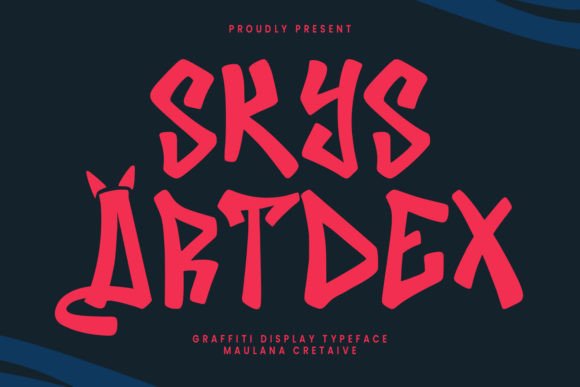
There is a specific kind of energy that only street art possesses. It is raw, unapologetic, and instantly commands attention. When you are trying to translate that visceral feeling into a digital or print project, standard modern typography often falls flat. You need something with grit, character, and a voice that sounds like it was spray-painted onto a brick wall rather than typed on a keyboard. This is where Skys Artdex enters the conversation. As a vibrant display font, it captures the essence of urban artistry, offering designers a tool to inject authentic graffiti culture into their work without needing a can of paint.
At its core, Skys Artdex is not just a collection of letters; it is a stylistic statement. The typeface features bold strokes and expressive flair that mimic the pressure variations of a marker or spray nozzle. Unlike a clean sans serif font designed for corporate neutrality, this creative font thrives on irregularity. The edges are slightly rough, the terminals flare out dynamically, and the overall structure suggests movement. It feels alive. For entrepreneurs and brand strategists looking to break away from the sterile aesthetics that dominate many industries, Skys Artdex offers a way to humanize a brand identity. It signals that a business is young, energetic, and perhaps a little rebellious.
Bringing Street Credibility to Brand Identity
The application of a font like Skys Artdex goes far beyond making things look "cool." In the realm of logo design and brand identity, typography dictates perception. If you are launching a skate shop, an urban clothing line, a music festival, or even a craft brewery, your visual language needs to resonate with your target audience. Using a traditional serif font might convey heritage, but it won't convey the pulse of the street. Skys Artdex bridges that gap. It allows small business owners and marketers to establish an immediate connection with a demographic that values authenticity over polish.
Consider the impact on packaging design. Imagine a limited-edition sneaker box or a bottle of hot sauce. The label needs to pop off the shelf. When you utilize Skys Artdex here, you aren't just labeling a product; you are creating an artifact. The font's heavy weight ensures legibility even from a distance, while its textured appearance adds tactile interest to a flat surface. This is crucial for commercial font usage where shelf presence directly correlates to sales. However, it is important to exercise restraint. Because this is a display font, it works best for headlines, logos, and short bursts of text. Using it for long paragraphs would overwhelm the reader and destroy readability.
In the digital space, the utility of Skys Artdex remains high. For social media graphics, particularly on platforms like Instagram or TikTok where visual stop-power is essential, this typeface shines. A quote overlay or a promotional banner using Skys Artdex will naturally draw the eye more effectively than a generic system font. It helps content creators stand out in a saturated feed. Furthermore, for web design, it serves as an excellent choice for hero sections and call-to-action buttons, provided it is used sparingly to maintain load times and clarity on mobile devices.
Mastering Readability and Visual Hierarchy
One of the most common mistakes designers make with graffiti-style fonts is sacrificing function for form. While Skys Artdex is undeniably stylish, its primary job is still to communicate. To ensure your message lands, you must understand how to manage visual hierarchy. The bold nature of Skys Artdex makes it perfect for top-level headings, but it requires a supportive partner for body copy. Pairing it with a neutral, highly legible sans serif font or a simple serif font creates a balanced composition. The contrast between the chaotic energy of the graffiti style and the orderliness of a standard text font guides the reader's eye naturally through the content.
Readability considerations are paramount. The expressive flair of Skys Artdex means that certain letterforms may overlap or feature unique ligatures that could confuse readers if set too small. Always test your designs at various sizes. What looks great on a large format poster might become an illegible blob on a business card. For editorial design, such as magazines or zines focused on urban culture, use Skys Artdex for pull quotes and chapter headers to break up blocks of text and add visual rhythm. This approach maintains professionalism while keeping the layout dynamic and engaging.
Consistency is another key factor. If you introduce Skys Artdex as part of your brand identity, use it consistently across all touchpoints. Whether it is a storefront sign, a website banner, or a merchandise tag, the font should be recognizable. This repetition builds brand recognition. Over time, your audience will associate that specific jagged, bold aesthetic with your business, fostering a sense of familiarity and trust. However, avoid forcing it into contexts where it feels out of place, such as legal documents or formal invitations, as this can undermine the professionalism you are trying to cultivate.
Practical Steps for Implementation and Licensing
Before diving into a project with Skys Artdex, take a moment to evaluate the fit. Ask yourself if the personality of the font aligns with the message you are trying to send. If your goal is to evoke nostalgia, rebellion, or creativity, this premium font is likely a strong candidate. If your goal is to convey strict corporate stability, you might want to look elsewhere. Once you have determined the fit, experiment with font pairing. Try combining Skys Artdex with a geometric sans serif for a modern look, or a slab serif for a heavier, industrial feel. The right combination can elevate a design from good to exceptional.
It is also vital to review the included styles and character sets. High-quality design assets often come with alternates, ligatures, and multilingual support. Check if Skys Artdex includes these features, as they allow for greater customization and versatility in your layouts. For instance, using alternate glyphs can prevent repetitive patterns in longer words, making the text feel more organic and hand-drawn.
Finally, always verify the licensing terms. As a commercial font, Skys Artdex likely has specific guidelines regarding usage in products for sale, web embedding, and broadcast media. Ensure you have the appropriate license for your intended use case to avoid legal complications down the road. Whether you are a hobbyist creating a flyer for a local event or a publisher designing a book cover, respecting intellectual property is non-negotiable. By understanding the nuances of Skys Artdex and applying it with intention, you can unlock a powerful avenue for creative expression that resonates deeply with audiences seeking something real and unfiltered.