Why Rushford Is the Bold Voice Your Design Project Needs
Choosing the right typeface often feels like picking the perfect outfit for a job interview or a first date. It sets the tone before a single word is read. If you have ever stared at a blank canvas, unsure whether your design should whisper or shout, you understand the weight of this decision. This is where Rushford enters the conversation. It isn't just another file in your fonts folder; it is a specific stylistic choice that bridges the gap between modern cleanliness and retro character.
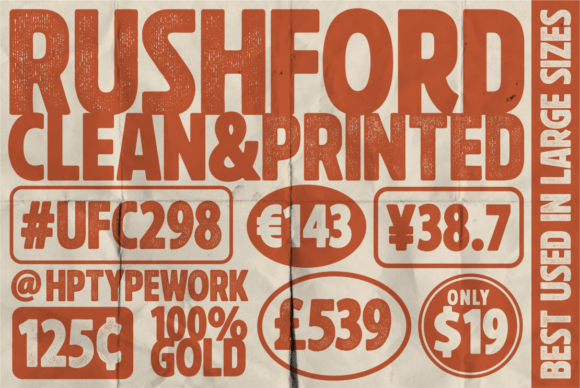
At its core, Rushford is a display font that leans heavily into boldness. Unlike body text fonts designed for long paragraphs, this typeface demands attention. It carries a visual weight that makes it ideal for headlines, logos, and short bursts of text where impact is the primary goal. When you apply Rushford to a project, you aren't just adding letters; you are injecting a sense of confidence and strength into the layout.
The Visual Psychology of Bold Typography
Why do designers reach for a font like Rushford when the brief calls for something "strong"? The answer lies in how our brains process shape and weight. A clean, bold font signals authority. Think about the signage on a construction site or the title of an action movie poster. These elements need to be legible from a distance and convey stability. Rushford achieves this through its thick strokes and solid structure.
However, what makes this font particularly interesting for creators today is its versatility within the "bold" category. It avoids being overly industrial or cold. Instead, it retains a certain warmth that allows it to fit into lifestyle branding as easily as it fits into corporate identity. For a small business owner launching a new coffee shop, using a delicate script might feel too fragile, while a stark geometric sans-serif might feel too sterile. Rushford offers a middle ground: it is robust enough to stand out on a storefront sign but stylish enough to look good on a latte cup sleeve.
Bringing the 70s and 80s Back to Life
One of the most compelling use cases for Rushford is in themed event design, specifically for parties or gatherings inspired by the 1970s and 1980s. There has been a massive resurgence in retro aesthetics lately, with people craving the tactile, printed look of analog eras. A textured application of a bold font can instantly transport an invitation or a poster back to the days of vinyl records and neon arcades.
Imagine you are organizing a disco-themed birthday party. If you use a standard digital font, the invite might look flat and modern, breaking the immersion. But when you apply Rushford, perhaps with a slight grain overlay or a warm color palette, it mimics the imperfect ink spread of old letterpress printing. This "natural printed-look" adds a layer of authenticity that digital perfection often lacks. It tells the guest, before they even open the envelope, that this event is going to be fun, nostalgic, and slightly rebellious.
Practical Applications Across Industries
The utility of Rushford extends far beyond party invitations. Freelancers and marketers often struggle to find a typeface that works across different mediums without losing its personality. Here is how different professionals can leverage this font in real-world scenarios:
- Logo Design: For startups in the fitness, automotive, or craft beer industries, a logo needs to be memorable. Rushford's strong lines ensure that the brand name remains legible even when shrunk down for a social media profile picture or embroidered on a cap.
- Packaging: Consider a boutique soap maker or a hot sauce producer. The label is the primary sales tool on a crowded shelf. A bold title in Rushford can cut through the visual noise of competing products, drawing the eye immediately to the brand name.
- Book Covers and Movie Titles: Authors and independent filmmakers often work with limited budgets but need high-impact visuals. Using Rushford for a thriller novel cover or an indie film title card creates an immediate genre expectation. It suggests tension and drama without needing excessive graphic embellishments.
- Posters and Flyers: Whether it is a concert announcement or a community yard sale, the hierarchy of information is crucial. Rushford works exceptionally well as the primary header, allowing secondary details to sit comfortably underneath in a simpler sans-serif font.
Matching the Font to the Message
It is important to remember that no font is a magic bullet. The effectiveness of Rushford depends entirely on context. If you are designing a website for a meditation app or a pediatric dentist, the heavy weight of this font might feel too aggressive. In those cases, the "stronger tone" it provides could inadvertently signal stress rather than calm.
Conversely, if you are marketing a high-energy sports drink or a rugged outdoor gear line, a light, airy font would fail to communicate durability. This is where understanding the visual theme of your design becomes critical. Before downloading or purchasing Rushford, ask yourself: What emotion am I trying to evoke? Does my audience respond better to tradition and stability, or innovation and speed?
For educators creating workshop materials, Rushford can be used to highlight key takeaways or module titles, ensuring that students' eyes are drawn to the most important information. For bloggers, it serves as an excellent choice for featured image text, making posts more shareable on platforms like Pinterest where visual clarity drives clicks.
Technical Considerations for Best Results
When integrating Rushford into your workflow, keep in mind that bold fonts require breathing room. Because the characters are thick, they can appear cramped if the kerning (the space between letters) is too tight. Give the letters space to stand apart; this enhances their boldness rather than diminishing it. Additionally, consider the contrast with your background. A bold font on a busy background can become muddy. Pair it with solid colors or simple textures to let the shape of the letters do the work.
Another factor is scalability. While Rushford shines in large sizes, test it at smaller dimensions if you plan to use it for sub-headings. Ensure that the intricate parts of the letterforms do not disappear when reduced. Most modern design software handles this well, but a quick print test or mobile preview is always a wise step before finalizing a project.
Ultimately, tools like Rushford are about solving communication problems. They help you say what you mean with visual clarity. Whether you are a hobbyist making a greeting card for a friend or an entrepreneur launching a new product line, the right typography removes the friction between your idea and your audience's understanding. By choosing a font that aligns with your intended tone—be it the nostalgic charm of the 80s or the commanding presence of a modern logo—you ensure that your design doesn't just exist, but resonates.