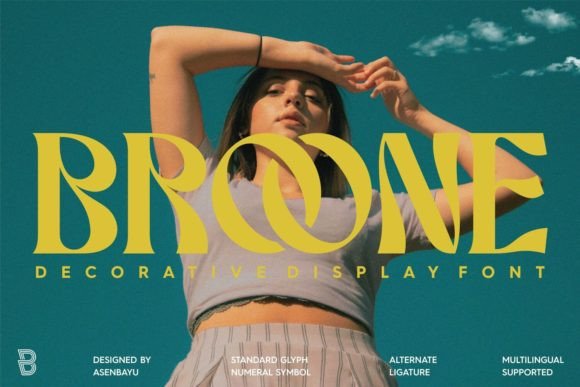
Evaluating Broone: A Versatile Display Font for Modern and Retro Design Projects
Selecting the right typography is often the most critical decision in a design project, acting as the visual voice that communicates brand personality before a single word is read. Among the vast array of display fonts available to designers today, Broone has emerged as a distinctive option worth evaluating. This typeface is characterized by its stunning versatility, blending wavy, organic shapes with structured serif outlines. The result is a unique aesthetic that manages to feel both youthful and natural while maintaining a level of sophistication suitable for professional applications. For designers aged 20 to 50 who are currently researching resources for packaging, logos, or editorial layouts, understanding where Broone fits within the broader typographic landscape is essential for making an informed choice.
The Distinctive Character of Broone
What sets Broone apart from standard display options is its specific combination of form and function. Many decorative fonts lean heavily into one style—either strictly geometric and modern or overly ornate and vintage. Broone bridges this gap. The core of its design language relies on the proportion of wavy shapes that soften the rigidity typically associated with serif fonts. These curves introduce a sense of movement and fluidity, suggesting a natural, hand-crafted origin without sacrificing legibility.
The inclusion of serif outlines provides a necessary anchor. Without them, the wavy elements might render the text too casual or difficult to read at smaller sizes. With them, the font gains a classic authority that allows it to perform well in contexts requiring a touch of tradition. This duality makes Broone particularly effective for projects that aim to evoke nostalgia while remaining relevant in a contemporary market. It is not merely a "retro" font; it is a hybrid that respects historical design principles while utilizing modern proportions.
Comparative Analysis: Broone vs. Traditional Categories
When evaluating Broone against other categories of display typography, several tradeoffs become apparent. Designers often oscillate between pure sans-serif grotesques for a clean, corporate look and heavy slab serifs for impact. Broone occupies a middle ground that neither of these categories fully addresses.
- Vs. Pure Script Fonts: While script fonts offer high elegance and flow, they often suffer from readability issues, especially in all-caps settings or on textured backgrounds. Broone offers the organic feel of a script but retains the structural clarity of a serif, making it a safer choice for primary headlines where instant recognition is required.
- Vs. Standard Serifs: Traditional serifs like Times New Roman or Garamond are excellent for body text but can lack the personality needed for standout packaging or poster art. Broone injects the "youthful touch" that standard serifs often lack, providing the distinctiveness needed for branding without becoming illegible.
- Vs. Novelty Display Fonts: Many decorative fonts are too stylized for versatile use, working only in very specific, narrow contexts. Broone's balanced proportions allow it to be used across a wider range of media, from large-format posters to smaller product labels, without losing its character.
This comparison highlights that Broone is not necessarily a replacement for utility fonts but rather a specialized tool for identity and emphasis. It excels where a brand needs to communicate approachability and creativity simultaneously.
Ideal Use Cases and Practical Applications
Understanding the strengths of Broone helps in identifying the scenarios where it will deliver the highest return on investment for a design project. Its ability to straddle modern and retro aesthetics makes it highly adaptable.
Packaging and Label Design
In the realm of consumer goods, particularly in the food, beverage, and cosmetic industries, packaging must tell a story instantly. Broone is exceptionally well-suited for attractive packaging label designs. Imagine a craft soda brand aiming for a 1970s vibe but needing to appeal to a 2024 audience. The wavy shapes of Broone evoke the free-spirited design trends of the past, while the clean serif outlines ensure the product name remains crisp and premium on the shelf. It works equally well for artisanal honey jars, small-batch coffee bags, or boutique skincare lines where a "natural" ingredient list is a key selling point.
Logo Creation and Brand Identity
For unique desired logos, the font provides a strong foundation. Because it carries so much character, logos using Broone often require minimal additional iconography. The typography itself becomes the logo. This is advantageous for startups looking to reduce design complexity while maximizing memorability. However, designers should be aware that because the font is so distinctive, it may dominate a logo composition, requiring careful balancing with secondary sans-serif fonts for taglines or contact information.
Fashion and Editorial Posters
The fashion industry frequently cycles through retro trends, and Broone fits seamlessly into fashion campaigns that reference past decades. It is ideal for poster designs promoting music festivals, art exhibitions, or clothing collections. The fluid lines of the letters create a dynamic rhythm that draws the eye across the poster, guiding the viewer through the hierarchy of information. In editorial layouts, using Broone for pull quotes or section headers can break up the monotony of standard text blocks, adding a layer of visual interest that keeps the reader engaged.
Limitations and Decision Factors
While Broone is a powerful tool, it is not a universal solution. A prudent designer must recognize its limitations to avoid misapplication. The primary constraint lies in its readability at very small sizes or in long-form body text. The decorative nature of the wavy shapes and serif details can cause visual fatigue if used for paragraphs exceeding a few sentences. It is strictly a display font, intended for headlines, titles, and short bursts of text.
Furthermore, the "youthful" quality of the font may not align with brands that need to project extreme seriousness, such as financial institutions, law firms, or medical device manufacturers. In these sectors, the organic curves might be perceived as lacking the necessary gravity or authority. When comparing options, if the project brief demands absolute neutrality or stark minimalism, a cleaner geometric sans-serif might be a more appropriate alternative.
Another factor to consider is pairing. Because Broone has such a strong personality, choosing a companion font requires care. Pairing it with another highly decorative font can result in a cluttered, confusing visual experience. The best practice is to pair Broone with a simple, neutral sans-serif or a very traditional serif for body copy, allowing Broone to shine as the focal point without competition.
Making the Final Choice
Ultimately, the decision to use Broone comes down to the specific emotional resonance required by the project. If the goal is to create a design that feels human, approachable, and slightly nostalgic yet undeniably modern, Broone is a top-tier candidate. Its blend of wavy shapes and serif outlines offers a rare versatility that few other display fonts achieve.
Designers evaluating their toolkit should consider Broone when working on projects that benefit from a "hand-made" feel without sacrificing professional polish. Whether updating a brand identity, launching a new product line, or creating promotional materials, this font offers a compelling balance of style and substance. By understanding its specific strengths in packaging, logos, and posters, and acknowledging its limitations regarding body text and formal contexts, professionals can leverage Broone to create impactful, memorable designs that resonate with audiences across different demographics.
In a market saturated with generic typefaces, choosing a font with distinct character like Broone can be the differentiator that elevates a good design to a great one. It invites the viewer to look closer, offering a visual texture that suggests care, creativity, and a connection to natural forms. For those ready to move beyond standard options and explore typography that bridges the gap between eras, Broone represents a thoughtful and effective choice.