Unlocking Creative Potential with the Guest Book Typeface
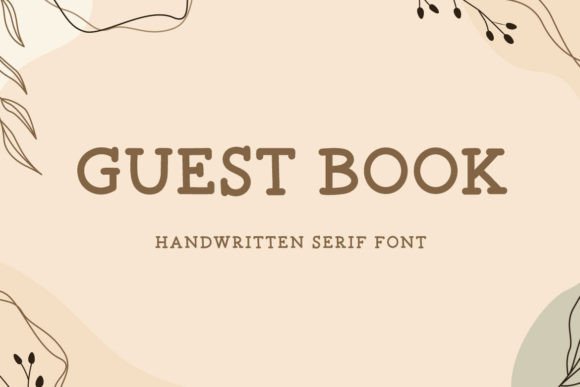
In the vast landscape of typography, few fonts manage to strike a balance between professional utility and artistic flair quite like Guest Book. This handwritten serif font has carved out a unique niche for itself, becoming a go-to choice for designers who need to inject a sense of personality into their projects without sacrificing readability. Unlike many script fonts that lean heavily towards casual cursive or rigid geometric sans-serifs, Guest Book offers a distinct character that feels both established and approachable. It mimics the natural flow of handwriting while retaining the structural integrity of a serif typeface, making it an incredibly versatile tool in a modern designer's arsenal.
The appeal of Guest Book lies in its ability to bridge the gap between formal documentation and creative expression. When you look at the letterforms, you notice subtle variations in stroke weight and terminal shapes that suggest human touch. This is not a font generated by a machine to look perfect; it is designed to look authentic. In an era where digital perfection often feels cold and impersonal, choosing a typeface that carries the warmth of hand-lettering can significantly impact how an audience connects with your message. Whether you are designing a wedding invitation or a bold street poster, the emotional resonance of this font cannot be overstated.
The Unique Characteristics of a Handwritten Serif
Understanding what makes Guest Book stand out requires a closer look at its anatomical features. As a handwritten serif, it combines the traditional elegance of serifs—the small lines attached to the end of a stroke in a letter—with the organic irregularities of pen-on-paper writing. Most serif fonts, such as Times New Roman or Garamond, are built on strict grids and mathematical proportions. Guest Book, however, introduces a delightful unpredictability. The baseline might shift slightly, and the curvature of bowls in letters like 'o' or 'e' may vary, creating a rhythm that feels alive.
This specific combination of traits serves a functional purpose beyond aesthetics. The serifs provide excellent legibility, guiding the eye smoothly across lines of text, which is crucial for body copy or longer headlines. Meanwhile, the handwritten aspect prevents the text from feeling sterile. This duality allows the font to perform well in contexts where a pure script font might be too difficult to read, and a standard serif might be too boring. It occupies a "sweet spot" in typography where style meets function, ensuring that the viewer absorbs the content without being distracted by overly ornate flourishes or monotonous repetition.
Applications Across Diverse Industries
The versatility of Guest Book is perhaps its greatest asset. Because it does not pigeonhole itself into a single stylistic category, it finds homes in a wide array of industries and project types. Let's explore how this font transforms various mediums:
- Comic Books and Graphic Novels: In the world of sequential art, lettering is critical. Dialogue bubbles and narration boxes require a font that is easy to read quickly but also adds flavor to the story. Guest Book works exceptionally well for narration or captions that need to feel personal, like a diary entry within the comic, or for titles that require a vintage yet accessible feel.
- Educational Materials: Schools and educational publishers often struggle to find fonts that are friendly enough for children but structured enough to teach proper letter recognition. The clear serif structures in Guest Book make it an excellent candidate for worksheets, storybooks, and classroom posters. It feels inviting rather than authoritative, encouraging students to engage with the material.
- Advertising and Flyers: When creating flyers for local events, sales, or community gatherings, standing out is key. A headline set in Guest Book grabs attention because it looks different from the ubiquitous sans-serif fonts used in corporate advertising. It suggests a human element, implying that there are real people behind the brand or event.
- Social Media Content: In the fast-scrolling environment of Instagram, TikTok, and Facebook, visuals must stop the thumb. Using Guest Book for quote graphics, announcement stories, or overlay text on videos adds a layer of sophistication. It performs particularly well for lifestyle brands, coaches, and creatives who want to maintain a curated but authentic aesthetic.
Elevating Brand Identity with Logo Design
One of the most impactful uses of Guest Book is in logo design. A logo is the face of a business, and the typography chosen can define the entire brand personality. For businesses that want to convey trustworthiness alongside creativity—such as boutique cafes, artisanal bakeries, independent bookstores, or consulting firms—this font is a powerhouse. The serif elements communicate tradition and reliability, while the handwritten nature suggests customization and care.
Consider a scenario where a new coffee shop is launching. They want to avoid the generic, hyper-modern look of tech startups but also don't want to appear outdated. Utilizing Guest Book for their signage and menu boards creates an atmosphere of warmth. It tells the customer, "We take our craft seriously, but we are also friendly and approachable." Furthermore, because the font holds up well at various sizes, it remains effective whether it is stamped on a small coffee cup sleeve or blown up on a storefront window. The clarity of the characters ensures that the brand name is instantly recognizable, even from a distance.
Practical Considerations for Designers
While the aesthetic benefits of Guest Book are clear, practical implementation requires some strategic thinking. When integrating this font into a workflow, designers should consider hierarchy and pairing. Because Guest Book has so much character, it often shines brightest when used for headlines, subheaders, or short bursts of text. Pairing it with a clean, neutral sans-serif for body copy can create a beautiful contrast that keeps the design balanced. If you use it for long paragraphs, ensure the line height (leading) is generous enough to let the unique shapes of the letters breathe, preventing the text from looking cluttered.
Another factor to consider is the medium of output. For digital screens, the slight irregularities in the stroke width render beautifully on high-resolution displays, adding texture to flat designs. However, for print applications like large format posters or billboards, it is essential to check the legibility at scale. Fortunately, the robust structure of the serifs in Guest Book generally ensures that it prints crisply, maintaining its integrity even when ink spreads slightly on textured paper. This makes it a reliable choice for physical marketing materials where quality control is paramount.
Why Choose Guest Book Over Other Script Fonts?
The market is saturated with handwritten fonts, so why should a designer specifically reach for Guest Book? The answer lies in its restraint. Many script fonts suffer from excessive swashes, tangled ligatures, or inconsistent spacing that can make them frustrating to work with. They often require significant manual kerning adjustments to look right. Guest Book, by contrast, is engineered with usability in mind. The spacing between characters is generally well-calibrated, reducing the time a designer spends fixing typographic errors.
Moreover, the "serif" aspect sets it apart from the sea of cursive scripts available online. Cursive fonts can sometimes feel too informal or feminine for certain projects. Guest Book offers a gender-neutral, professional tone that doesn't sacrifice style. It is sturdy enough to be used in male-oriented branding or serious editorial contexts where a flowing script would feel out of place. This adaptability means that purchasing or downloading this font provides a higher return on investment, as it can be reused across vastly different projects without feeling repetitive or out of context.
Integrating into Modern Workflows
In modern creative workflows, efficiency is just as important as creativity. Designers using tools like Adobe Illustrator, Photoshop, or Canva need assets that work seamlessly. Guest Book fits effortlessly into these ecosystems. Its OpenType features, if available in specific versions, might include alternate characters that allow for further customization, letting users swap out specific 'a's or 'g's to avoid repetition in logos or titles. This level of control empowers designers to create unique compositions without needing to draw custom lettering from scratch.
Furthermore, the rise of remote work and digital collaboration means that font files are often shared among teams. A font like Guest Book, which is widely compatible across operating systems and design software, reduces friction in collaborative projects. Whether a team is working on a school yearbook, a corporate annual report, or a series of social media ads, having a reliable, high-quality typeface ensures consistency across all deliverables. It becomes a shared visual language that unifies disparate pieces of content into a cohesive brand narrative.
Ultimately, the decision to use Guest Book is a decision to prioritize human connection in design. In a world increasingly dominated by AI-generated imagery and standardized templates, choosing a font that embodies the imperfection and warmth of human handwriting is a powerful statement. It invites the viewer to pause, read, and connect. From the pages of a comic book to the header of a professional flyer, Guest Book proves that typography is not just about conveying information—it is about setting a mood, telling a story, and leaving a lasting impression. By understanding its characteristics and applying it thoughtfully, creators can elevate their work from ordinary to extraordinary.