Angel Coast: Mastering Retro Style in Modern Design
Design trends are cyclical, and the current landscape is heavily influenced by a nostalgia for the mid-to-late 20th century. Whether you are building a brand identity for a new coffee shop, creating merchandise for a band, or designing social media graphics, the right typography can instantly communicate a specific era and mood. Angel Coast emerges as a powerful tool in this context. It is not merely a font; it is a comprehensive typographic system designed to bring that authentic retro serif and bold display aesthetic to your projects without the hassle of layering multiple files manually.
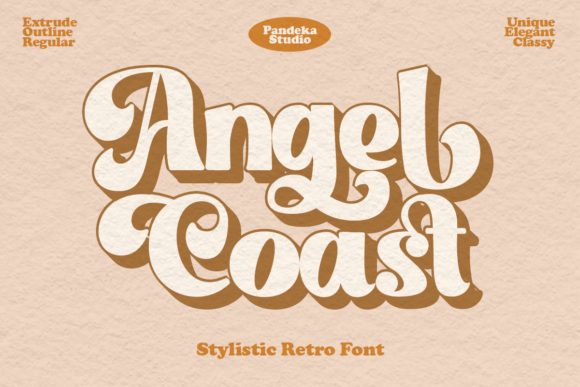
At its core, Angel Coast is a retro serif and bold display font family that captures the essence of vintage advertising and classic packaging. What sets this typeface apart from standard retro options is the inclusion of three distinct variations within a single pack: Regular, Outline, and Shadow. This triad offers immediate versatility, allowing designers to create depth and dimension right out of the box. For professionals and hobbyists alike, having these variants ready to use means less time hunting for matching shadow fonts or manually creating outlines in vector software, and more time focusing on the creative composition.
Streamlining Workflow with Built-in Variants
One of the most significant practical benefits of using Angel Coast is the efficiency it brings to the design process. In traditional workflows, achieving a layered, dimensional look often requires duplicating text layers, offsetting them, and hoping the weight matches perfectly. With the Shadow version included in the Angel Coast pack, you gain a pre-designed drop shadow that aligns perfectly with the character weights of the Regular font. This ensures optical consistency that is difficult to achieve manually.
Similarly, the Outline version provides a clean, hollow aesthetic that is popular in sticker design and apparel printing. Instead of stroking a font in Illustrator or Photoshop—which can sometimes result in uneven corner joins or distorted serifs—the Outline variant offers a purpose-built geometry. This is particularly valuable for those working in the t-shirt or apparel industry, where vinyl cutting machines like Cricut or Silhouette require precise paths. The dedicated outline font ensures that your cut lines are smooth and accurate, reducing material waste and production errors.
Elevating Brand Identity and Logotypes
For entrepreneurs and small business owners, establishing a memorable visual identity is crucial. A logotype needs to be legible at various sizes while conveying the personality of the business. Angel Coast's bold serif structure makes it an excellent candidate for logotypes that need to stand out on signage, business cards, and digital headers. The heavy stroke width commands attention, while the serif details add a touch of sophistication and heritage.
Consider a craft brewery or an artisanal bakery. These brands often rely on a sense of tradition and quality. Using the Regular version of Angel Coast for the primary brand name, paired with the Shadow version for a secondary element or slogan, creates an instant vintage vibe that suggests longevity and trustworthiness. The font's characteristics help bridge the gap between modern minimalism and classic charm, making it suitable for brand identity projects that aim to feel established yet fresh.
Practical Applications in Packaging and Print
Packaging design is another area where Angel Coast shines. On product labels, especially for food, beverages, and cosmetics, typography plays a pivotal role in shelf appeal. The high contrast and bold nature of this display font ensure that product names remain readable even when scaled down on small jars or bottles. The availability of the Outline variant allows for creative layering techniques; for instance, placing the Regular font inside the Outline version with a contrasting color can create a "badge" effect commonly seen in premium packaging.
Furthermore, for publishers working on magazines, books, or posters, Angel Coast serves as an impactful headline font. While it is a display face and not intended for long body copy, its presence in headlines can set the tone for an entire article or chapter. When used in editorial layouts, the font's retro characteristics can evoke a specific historical period relevant to the content, enhancing the reader's immersion.
Digital Presence and Social Media Graphics
In the digital realm, standing out in a crowded feed is a constant challenge. Content creators for YouTube, Instagram, and websites often need thumbnails and graphics that stop the scroll. Angel Coast's bold forms are highly legible on mobile screens, where smaller text often gets lost. The Shadow version, in particular, adds necessary separation between the text and busy background images, ensuring readability without relying on heavy drop-shadow effects that can look amateurish if not tuned correctly.
Bloggers and marketers can use this font to create consistent visual assets. By sticking to one versatile font family, you maintain brand cohesion across different platforms. Whether it is a Pinterest pin, a YouTube thumbnail, or a website banner, the consistent use of Angel Coast helps audiences recognize your content instantly. The retro aesthetic also taps into current design trends on social media, where vintage-inspired visuals often perform well due to their emotional resonance.
Ideal Users and Strategic Implementation
Who benefits most from Angel Coast? It is an ideal choice for freelancers, graphic designers, and hobbyists who need a reliable workhorse for retro-themed projects. Educators creating classroom materials or event flyers will find the bold lettering easy to read from a distance. Makers utilizing Cricut projects will appreciate the clean vectors of the Outline version for heat transfers and decals.
However, it is important to approach this font with a strategic mindset. As a bold display font, Angel Coast is not suitable for body text or long-form reading. Its strength lies in short phrases, titles, and logos. Overusing it can lead to visual fatigue. The best practice is to pair it with a simple, neutral sans-serif or a clean serif for supporting text. This contrast allows Angel Coast to do what it does best: grab attention and set the mood.
Additionally, while the retro style is versatile, it may not fit every brand narrative. Corporate finance firms or high-tech startups looking for a futuristic, ultra-modern aesthetic might find the vintage serif style too warm or nostalgic. It is essential to evaluate whether the "retro touch" aligns with your specific communication goals. If your goal is to evoke warmth, craftsmanship, nostalgia, or boldness, then Angel Coast is a fitting choice. If your brand relies on stark minimalism or futuristic innovation, you may need to compare options before committing.
Making the Most of the Three Styles
To truly leverage the value of this pack, experiment with combining the three styles. You might use the Regular for the main impact, the Outline as a subtle background texture or border element, and the Shadow to create a 3D pop effect. This layering capability mimics the complexity of hand-lettered vintage signs but with the precision and editability of digital fonts.
Ultimately, tools like Angel Coast are about solving design problems efficiently. They provide a shortcut to a specific aesthetic that would otherwise take hours to construct manually. By offering a cohesive set of Regular, Outline, and Shadow versions, this font family supports a wide range of creative endeavors, from stickers and packaging to digital marketing campaigns. For anyone looking to infuse their work with character and a distinct retro flair, understanding how to apply these specific typographic tools can significantly elevate the final result.