Mastering the Art of Elegance: A Practical Guide to Season Greeting
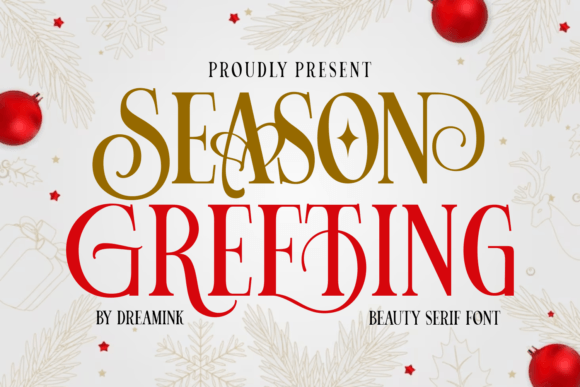
There is a distinct moment in any design project where the tone shifts from functional to emotional. This transition often hinges on a single choice: the typography. Season Greeting is more than just a typeface; it is a graceful beauty serif font that exudes elegance and charm, designed specifically to bridge that gap. With its timeless and sophisticated design, this font adds a touch of refinement to any project, transforming standard text into a visual narrative. However, possessing a beautiful tool does not guarantee a masterpiece. Many creators, from seasoned marketers to hobbyist bloggers, stumble not because the font lacks quality, but because they misunderstand how to wield its delicate nature effectively.
The allure of Season Greeting lies in its delicate serifs and fluid curves, which create a harmonious balance perfect for conveying warmth and style. Yet, this very delicacy is where most users encounter their first hurdle. A common mistake is treating this serif font as a workhorse for body text. While it is tempting to use such a stunning typeface throughout an entire invitation or website to maintain a consistent "luxury" feel, doing so often backfires. The intricate details that make the headlines pop can become visual noise when scaled down for paragraphs, leading to reduced readability and reader fatigue. When your audience struggles to decipher your message, the elegance you aimed for turns into frustration.
The Trap of Over-Decoration and Context Mismatch
Another frequent oversight involves context mismatch. Because Season Greeting brings a sense of classic beauty to your typography, there is a tendency to assume it fits every "special occasion." Designers often slap this font onto modern, minimalist tech branding or high-energy sports promotions simply because it looks expensive. This creates a dissonance between the brand's voice and its visual presentation. If you are launching a cutting-edge app, the traditional warmth of this serif might send the wrong signal, suggesting slowness or outdated methods rather than innovation. Before downloading or purchasing, ask yourself if the emotional weight of the font aligns with your core message. Does the fluidity of the curves support your story, or does it fight against it?
Furthermore, many beginners overlook the importance of pairing. Using Season Greeting in isolation often leaves a design feeling incomplete or overly ornate. The secret to maximizing its potential lies in contrast. Pairing these delicate serifs with a clean, geometric sans-serif for body copy or subheaders allows the beauty of the main font to shine without overwhelming the viewer. For instance, in a wedding invitation suite, using Season Greeting for the names and date, while utilizing a simple humanist sans-serif for the venue details and RSVP information, creates a hierarchy that is both readable and visually delightful. This approach ensures that every message remains clear while retaining that coveted touch of refinement.
Navigating Licensing and Technical Limitations
Beyond aesthetics, practical errors regarding licensing and file formats can derail a project. A significant number of users download free versions of premium-style fonts without verifying the license agreement. You might find a version of Season Greeting online labeled as "free for personal use," only to realize later that your client project or small business branding requires a commercial license. Ignoring this detail can lead to legal complications and unexpected costs down the line. Always check the foundry's terms explicitly. Are you allowed to embed this in a web application? Can it be used on merchandise for resale? These are critical questions to answer before you commit to the design direction.
Technical execution also plays a vital role in the final output. When exporting designs for digital screens versus print, the rendering of fine serifs can vary drastically. On low-resolution screens or cheap paper stock, the delicate curves of Season Greeting may disappear or appear jagged, stripping away the sophistication you intended. To avoid this, always test your typography at the actual size it will be viewed. If you are designing a business card, print a prototype. If you are creating a web banner, view it on a mobile device. If the thin strokes vanish, you may need to adjust the tracking (letter spacing) slightly or choose a bolder weight if available, ensuring the charm of the font survives the medium.
- Check Legibility First: Never sacrifice readability for style. If your audience has to squint to read the text, the design has failed regardless of how beautiful the font is.
- Verify Commercial Rights: Ensure your license covers your specific use case, whether it's social media graphics, printed packaging, or embedded web text.
- Mind the Medium: Test how the delicate serifs render on your intended platform, adjusting spacing or size to prevent loss of detail.
- Create Contrast: Balance the ornate nature of Season Greeting with simpler, neutral typefaces to guide the reader's eye effectively.
Ultimately, making every message a visual delight requires intentionality. Whether used in invitations, cards, or branding, Season Greeting offers a powerful way to communicate value and care. But like any high-end instrument, it requires a skilled hand. By avoiding the pitfalls of overuse, ignoring context, and neglecting technical constraints, you ensure that the elegance of the font enhances rather than hinders your communication. Take the time to experiment with pairings, respect the licensing terms, and prioritize the user experience. When you do, the result is not just text on a page, but a cohesive, charming experience that resonates with your audience long after they have finished reading.
As you move forward with your next project, remember that the best typography often goes unnoticed because it works so well. It guides the eye, sets the mood, and delivers the message without friction. Let Season Greeting be the element that adds that final layer of polish, but build the rest of your design on a foundation of clarity and purpose. This balanced approach will serve you well, whether you are a freelancer pitching to a new client or a small business owner refreshing your holiday campaign.